
P1 Ultimate System
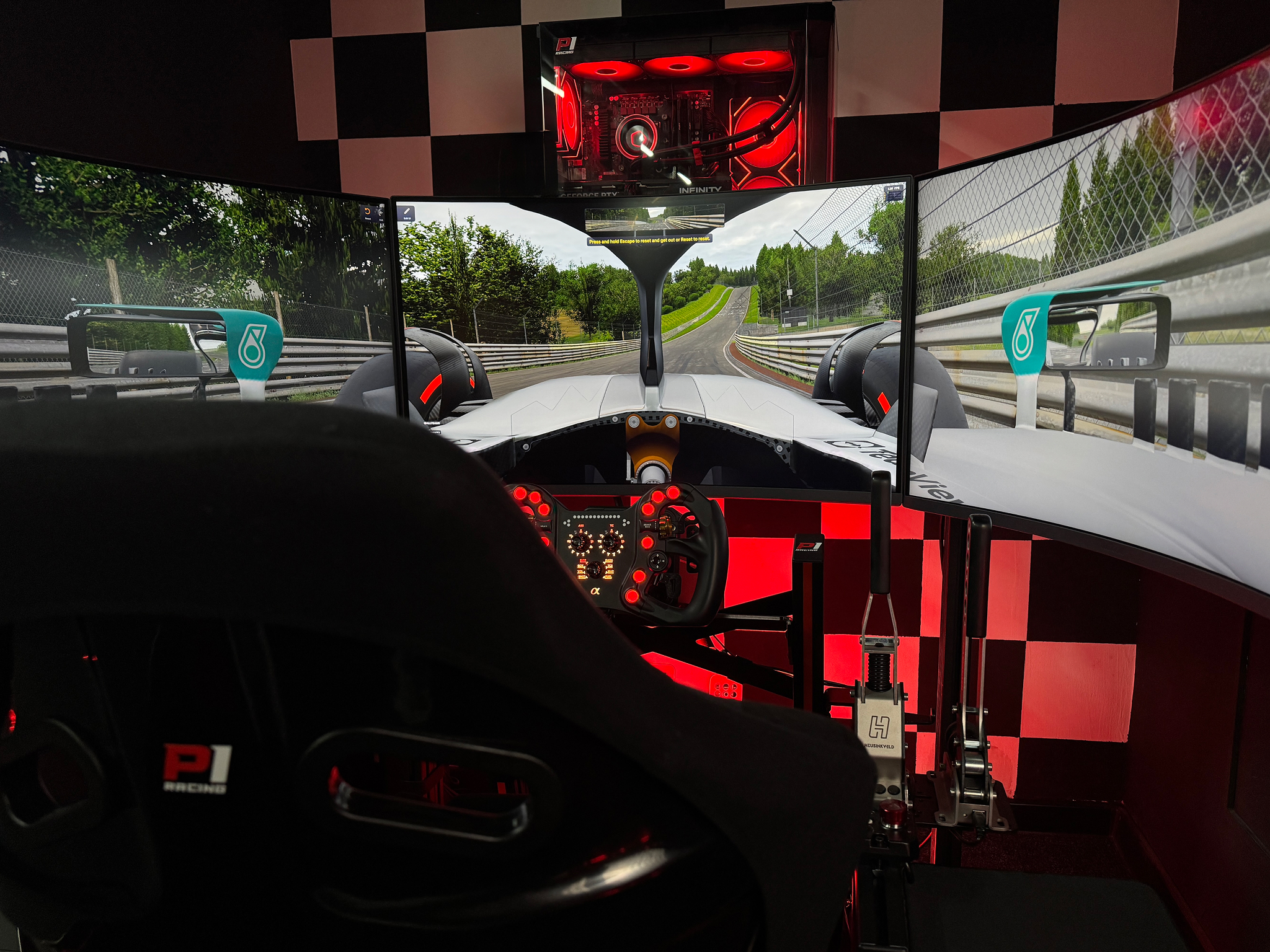
Triple 4K QD-OLED displays, active Simucube pedals, motorsport-grade controls and advanced multi-axis motion.
The fullest expression of what sim racing can give you today.


The P1 Ultimate System is created for the person who wants the finest and most advanced sim racing experience we can build.
It is for someone who wants the best steering, pedals, controls, visual system, computing hardware and physical immersion available within one properly integrated simulator.
Rather than beginning with a budget and working backwards, we begin with the driver, the room, the intended disciplines and the experience they want to create.
Every important area of the simulator is addressed: steering fidelity, active braking, shifting, image quality, peripheral vision, computing performance, seating position, motion and physical forces acting through the body.
This is not a fixed catalogue bundle. The final system is specified from scratch around the individual customer.
The steering system begins with the Simucube 3 Pro direct drive wheelbase.
Its 25 Nm output provides the force required to reproduce high-load racing cars, while its precision and response allow small changes in tyre load, surface condition, kerb profile and vehicle balance to remain clearly distinguishable.
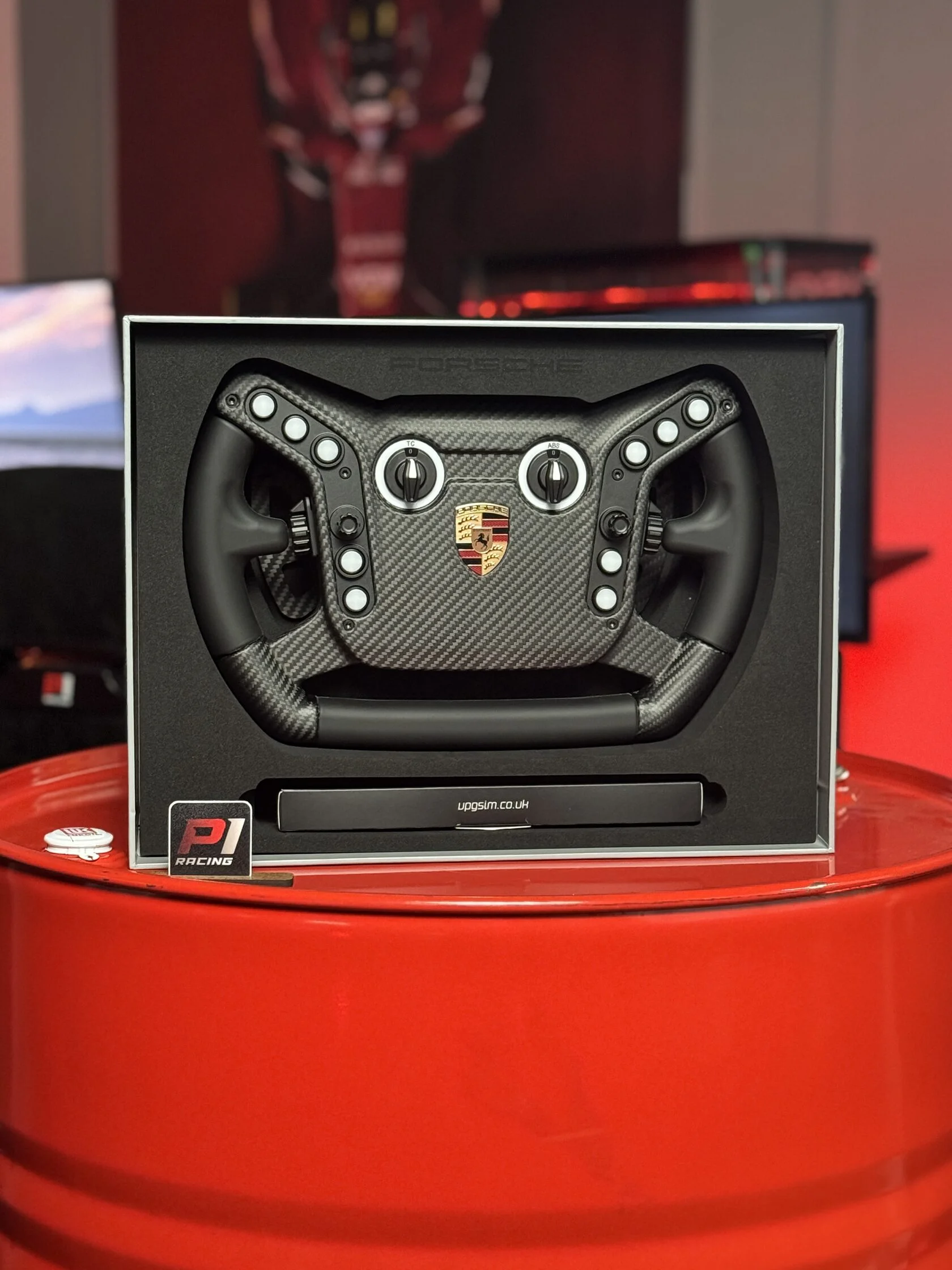
The main steering wheel is the Porsche-licensed VPG 911 Cup steering wheel.
Calling it a replica does not properly describe what it is.
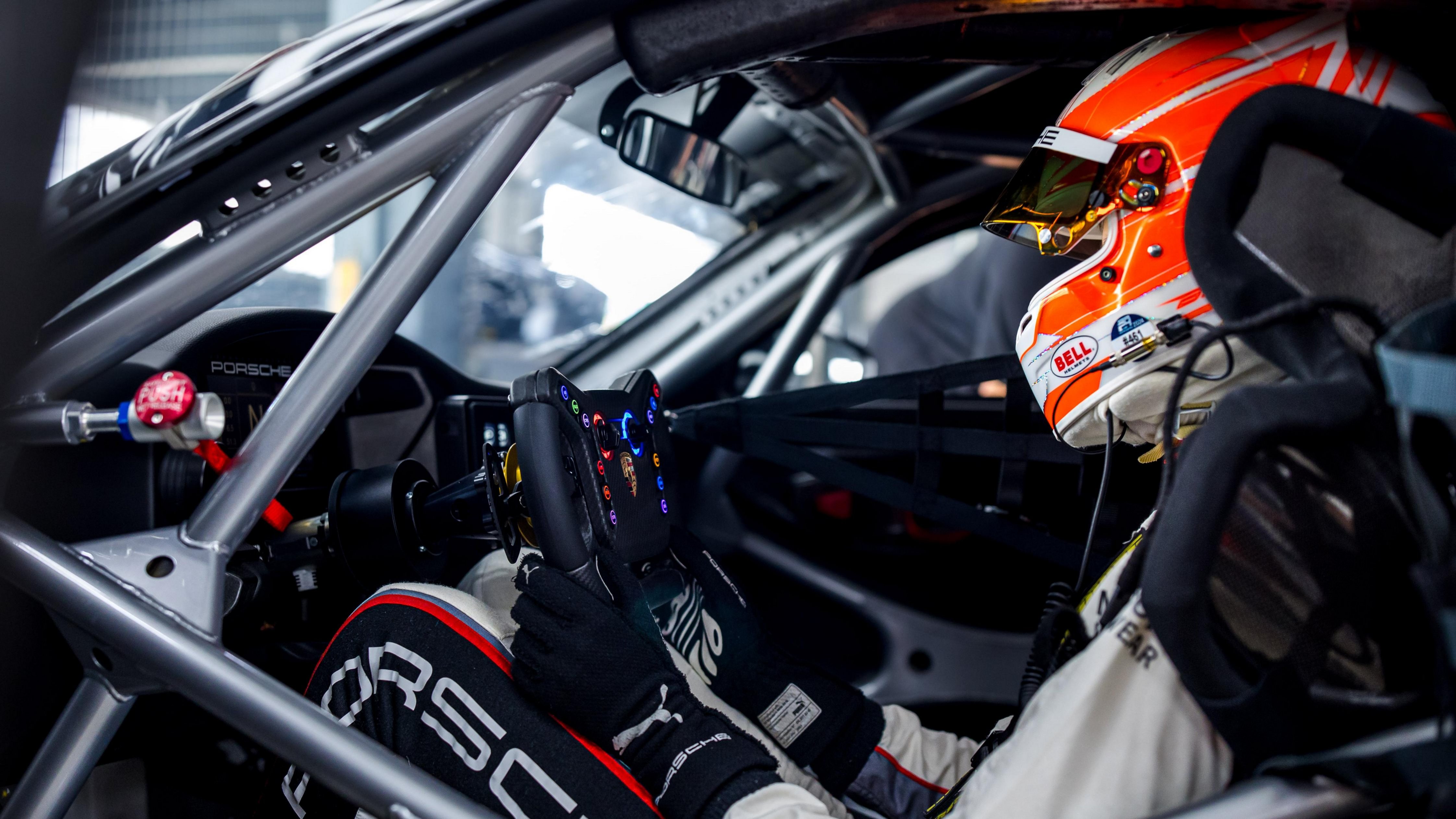
The carbon body and grips are produced in the same facility where the steering wheel for the real Porsche 911 Cup race car is manufactured, using the same motorsport-grade processes and materials. It was developed alongside its real-world counterpart rather than copied after the race car had already been released.
The wheel weighs approximately 1,030 grams, which is exceptionally light for a steering wheel at this level. Lower rotational mass allows the Simucube 3 Pro to react more quickly and preserve more of the fine force feedback detail reaching the driver’s hands.
The sim racing version remains extraordinarily close to the genuine Cup car wheel, with three practical adaptations for use outside the real race car.
First, the magnetic shift paddles have been made quieter. Inside a race car, paddle noise is irrelevant. In a home environment, a slightly quieter action avoids unnecessarily disturbing other people nearby while retaining the defined mechanical shift response.
Second, the rotary controls have been given a slightly lighter action. The controls in a real Cup car are designed to be operated while wearing substantial racing gloves and therefore require considerable force. Sim racers frequently drive without gloves or use much lighter gloves, so the action has been adapted to remain precise without becoming unnecessarily difficult to operate.
Third, the internal electronics are configured for simulation. The wheel connects to the PC, communicates with simulator software and supports extensive control mapping and lighting functionality required across multiple virtual cars.
In every other important respect, the objective is to place the genuine character, dimensions, materials and ergonomics of the Porsche 911 Cup wheel into the driver’s hands.
For disciplines that require a round wheel, including rally, drifting, road cars, oval racing and NASCAR, the final specification can include an additional round steering wheel. The principle is simple: the driver should have the correct control for the car being driven rather than forcing one wheel to cover every discipline.
The transmission experience is handled by the BDH H2SQ shifter.
It is designed and hand-assembled in the UK by specialists with a deep understanding of motorsport and mechanical controls. The BDH H2SQ can operate as both an H-pattern shifter and a sequential shifter, allowing one device to cover manual road cars, rally machinery and sequential competition cars.
Its importance lies not only in functionality but in the physical action. Each movement has weight, definition and a clear mechanical engagement. It feels closer to operating a real transmission mechanism than pressing a lightweight electronic switch.
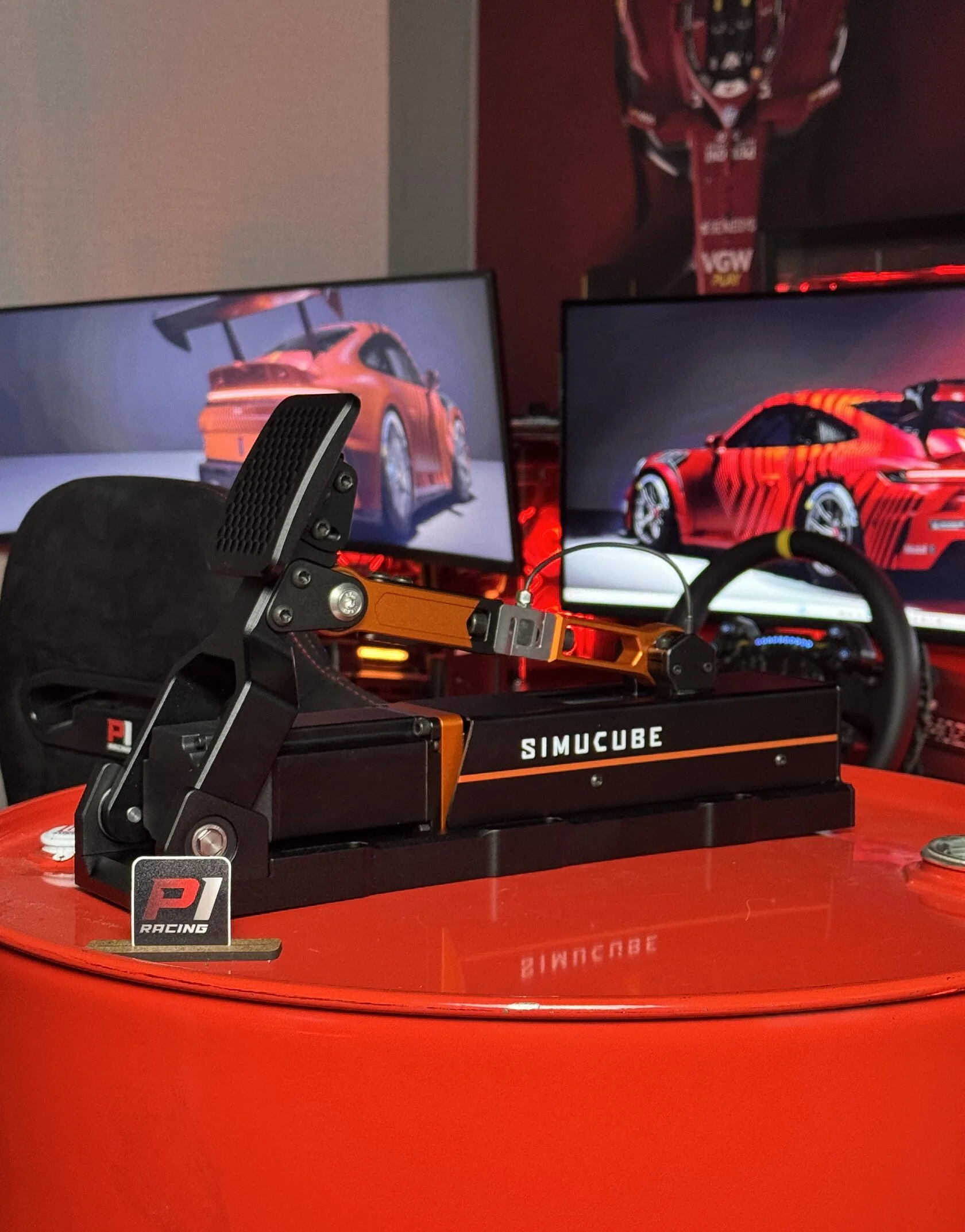
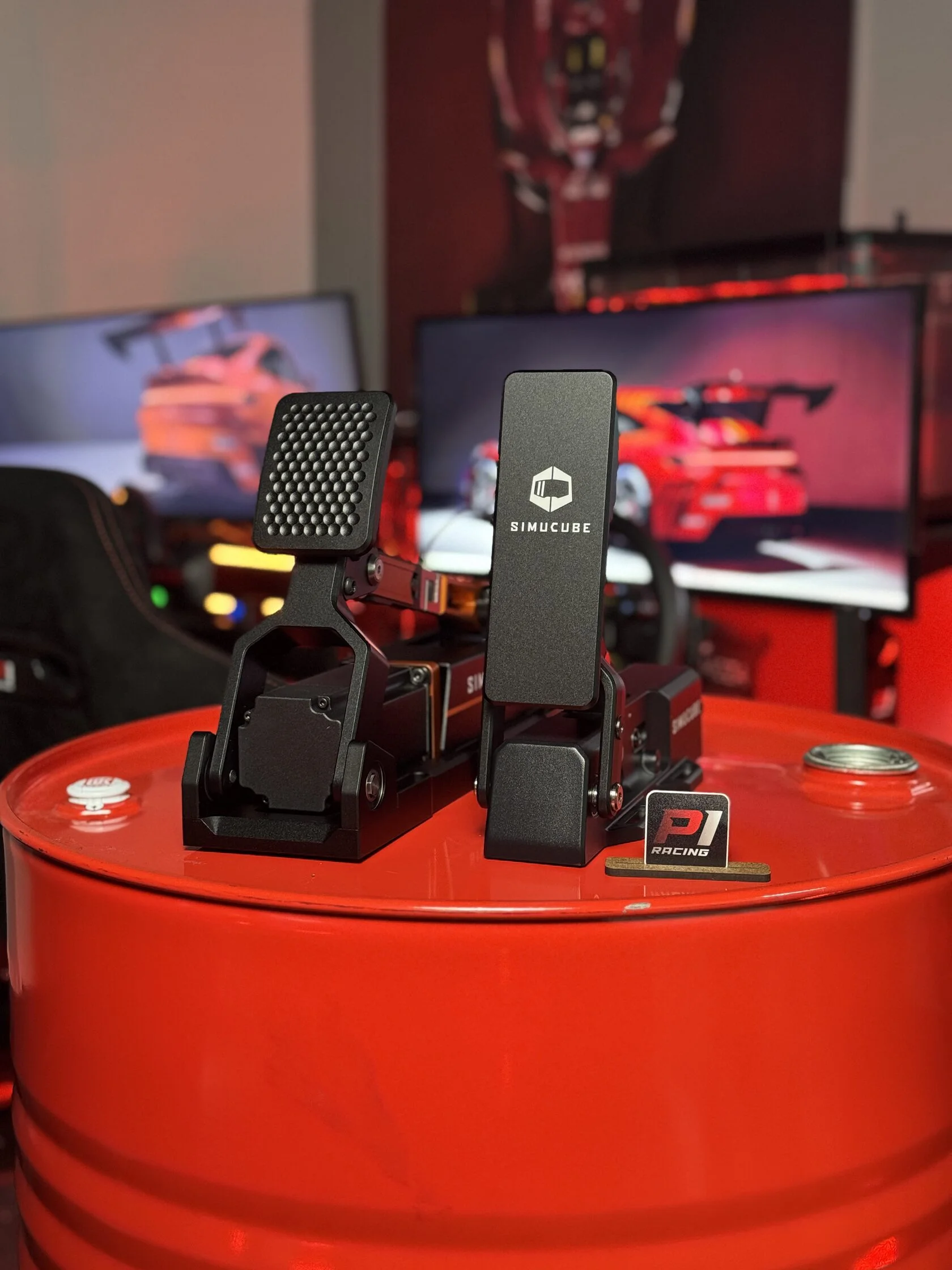
The pedal system uses the Simucube ActivePedal Ultimate.
It is one of the most advanced active pedal systems currently available. Resistance, travel, damping, friction and pedal response can all be configured through software with exceptional precision.
The brake can reproduce very different characteristics, from a softer road-car pedal to an extremely firm competition brake. Telemetry-based effects can communicate ABS, traction behaviour, vibration and other vehicle responses directly through the pedal.
The benefit is not limited to the sensation of an active pedal moving beneath the driver’s foot.
The greater advantage is repeatability and virtually unlimited adjustment.
A driver can create a lighter endurance profile, a firm qualifying profile and car-specific configurations for GT cars, prototypes, single-seaters or a particular real race car. Once a profile has been developed, it can be saved and recalled instantly without changing springs, elastomers or mechanical components.
At this level, the system is chosen because the objective is not the best price-to-performance ratio. The objective is the most advanced and precise pedal experience available.
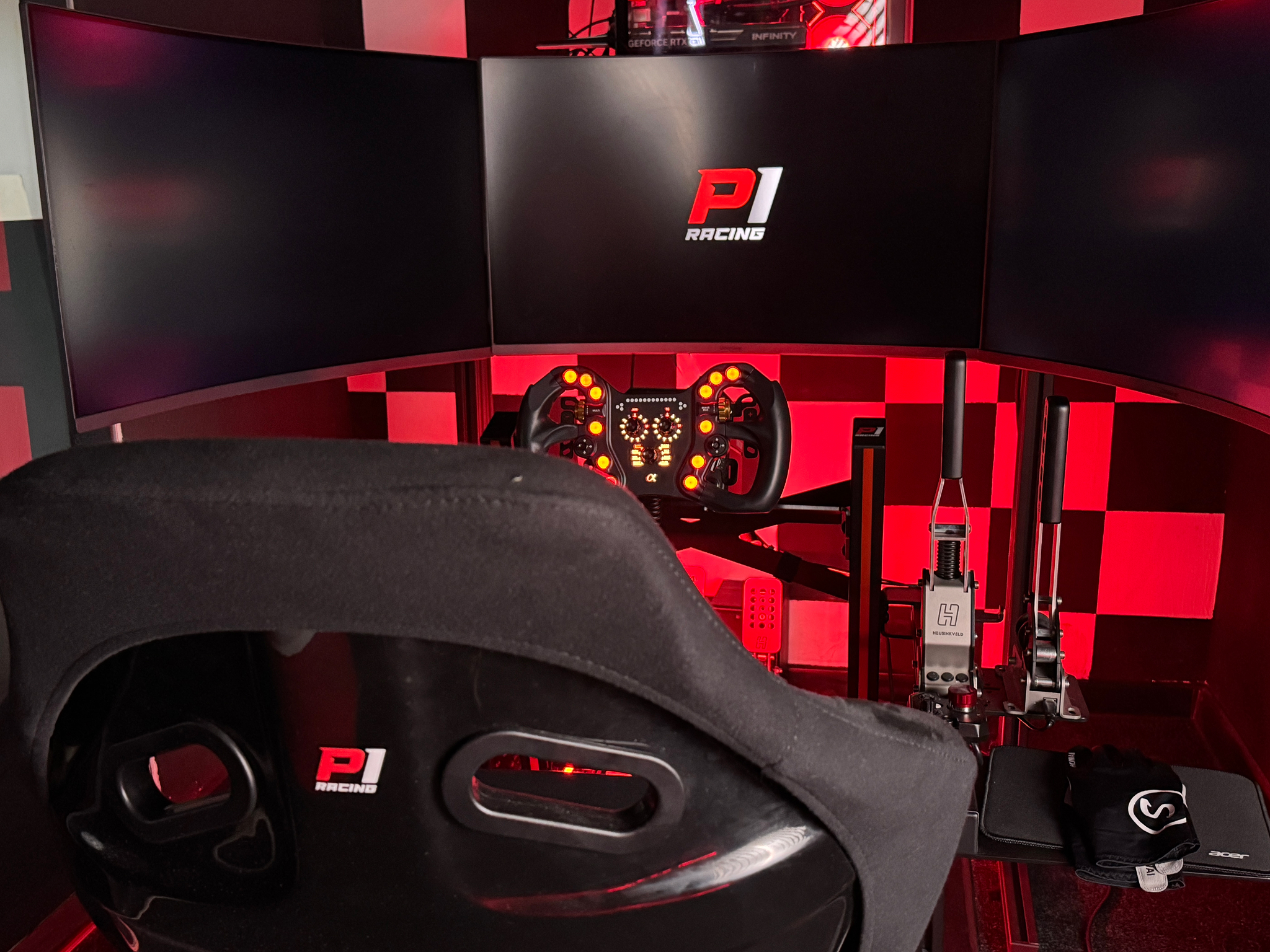
The visual environment consists of three 32-inch 4K QD-OLED monitors.
The triple-screen arrangement extends across the driver’s peripheral vision, positioning mirrors, apexes and surrounding cars where they would naturally appear. It creates a significantly broader and more configurable field of view than a single ultrawide display.
The QD-OLED panels provide deep blacks, strong contrast, rich colour and exceptionally fast response. Night races, changing light, detailed cockpits and surrounding cars are reproduced with the image quality expected from a system at this level.
Driving three 4K displays requires exceptional computing performance. The included high-performance PC with an NVIDIA GeForce RTX 5090 is therefore designed to run modern racing simulators at extremely high visual settings while maintaining the frame rate and responsiveness required for serious driving.
The cockpit uses an exceptionally rigid and highly adjustable anodised aluminium-profile structure. It provides the strength required for the high-torque wheelbase, active pedals and motion system, while allowing the driving position to be configured precisely around the customer.
The proposed specification uses a premium Sparco QRT performance bucket seat, but the final seat is selected around the driver’s body shape, preferred seating position and, where relevant, their real road or race car.
For someone who already competes in motorsport, we can select the same seat or the closest suitable alternative to the seat used in their real car. An appropriate FIA-homologated seat may also remain relevant outside the simulator, depending on the customer’s plans and technical requirements.
The defining feature of the P1 Ultimate System is its advanced multi-axis motion platform.
This is not a basic seat mover intended to create exaggerated movement for entertainment. The system acts through the complete cockpit and communicates vehicle behaviour through pitch, roll, heave, surge and rotational movement.
Under braking, the body loads forwards. Under acceleration, the system creates a corresponding rearward sensation. Kerbs, elevation changes, compression, weight transfer and loss of rear grip can be communicated physically through the platform.
The system also includes active seat belts.
Under braking, the belts tighten against the driver’s body and help reproduce the physical sensation of deceleration that cannot be communicated through the wheel and pedals alone. Together with the motion platform, they create another layer of information through the driver’s body.
The objective is not to make the simulator move as much as possible.
Poorly configured motion can become exaggerated, distracting and less realistic. The motion must support what the driver sees on the monitors and feels through the steering wheel, pedals and belts.
We therefore configure the motion profiles around the customer’s preferred cars and intended use. The goal is maximum coherence between the visual information, force feedback, pedal response, belt tension and physical movement of the cockpit.
Every required adapter, quick release, spacer, mount, cable, network component and supporting part within the agreed specification is included.
We build the system, install it, configure the hardware and software, establish the correct driving position and prepare the initial steering, pedal, display and motion profiles.
The P1 Ultimate System is not merely a collection of flagship components.
It is a complete driving environment designed around one individual, one space and one intended experience.
It represents the closest practical connection we can create between sim racing, real motorsport and the physical sensation of driving.
Price and customisation
Price: £33,000
The price includes the complete system and all components described in the agreed specification, together with assembly, installation and initial configuration.
The P1 Ultimate System is specified individually and can be changed in any area.
The seat, steering wheels, controls, displays, cockpit arrangement, computer specification and motion system can all be adapted around the customer, their room and any real car they want the simulator to reflect.
Existing compatible equipment can be incorporated and removed from the quotation. Additional controls, a button box, alternative steering wheels, different seating, audio equipment or other specialist components can be added where appropriate.
The website configuration should therefore be understood as an example of what the P1 Ultimate System can include, not as a limitation on what we can create.
Tell us what you are looking for, and we will prepare a system specification around you.